
The We Are Righteous label Collaborations: Standout Partnerships and Releases
The label has built its reputation through deliberate, small-batch partnerships rather than mass-produced seasonal filler. Anyone looking closely at the brand swiftly picks up on that its partnership pieces hold a separate significance than its independent lineups — they tend to sell faster, generate more community discussion, and often become touchstones in any candid review of the label’s output. This article breaks down how these collaborations operate, what they have produced, and why they are significant to anyone assessing the brand as a serious name in the independent streetwear space rather than a fleeting fad.
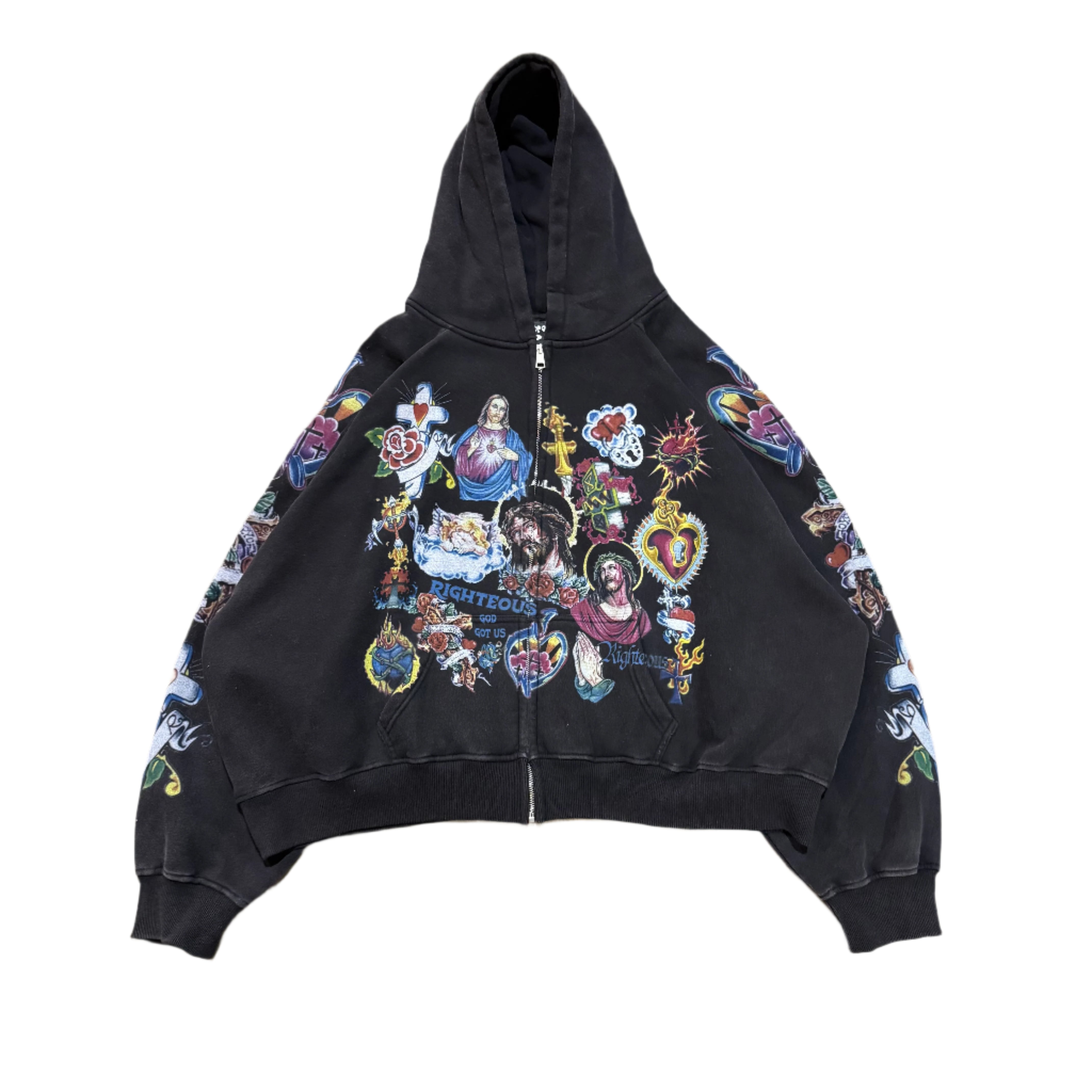
What collaborations lay bare, fundamentally, is a brand’s values. When the brand partners with an artist, a smaller label, or a cultural institution, the finished products have to answer to two audiences at once — the brand’s core buyers and the partner’s own following. That push and pull has consistently driven the brand’s creative team to sharpen details: stitching, fabric weight, and print placement all undergo closer inspection before a joint release hits the market. That’s partly why the righteous hoodie continues to be the item most asked for whenever a new partnership is announced, since the shape has already demonstrated its appeal across several releases.
Why Collaborations Matter for a Brand Like Righteous
Smaller labels don’t typically have the promotional resources of major fashion houses, so joint releases act as a pragmatic approach to reach new audiences without compromising the central visual identity. For the brand, this has meant partnering with partners who align stylistically — bold graphics, muted colorways, and utilitarian cuts — rather than chasing partners purely for name recognition. That https://righteousoutlet.org/ restraint shows up in customer feedback: repeat buyers frequently mention in reviews that joint-release items feel in line with the rest of the brand’s apparel lineup instead of feeling like a bolted-on side project.
Behind these drops sits a practical supply-chain reality as well. Limited collaborations generally produce tighter manufacturing runs, often in the range of a few hundred to low thousands of units depending on the partner and garment type. This limited availability is by design. It maintains manufacturing standards more rigorous, reduces excess inventory waste, and allows the brand to experiment with heavier cotton blends or unusual dye processes that wouldn’t be cost-effective at higher output levels. For a label still building out its production partnerships, this method has been a sensible middle ground between aspiration and practical limitations.
Which partnerships get repeated has in large part been driven by community response. Drops that sell out within days tend to get sequels or expanded colorways the following season, while less popular releases fade out of the lineup without fanfare. For a mid-sized apparel company, this kind of feedback loop is remarkably transparent, and it’s largely why longtime customers view we are righteous review threads as trustworthy feedback rather than hype.
Collaboration Categories Worth Knowing
Righteous collaborations don’t all follow the same pattern, and it helps to break them down into rough categories based on which partners the brand chooses and the underlying purpose of the release.
- Collaborations with artists — limited graphic prints created alongside illustrators or photographers, usually used across hoodies and tees.
- Joint releases between labels — joint releases with fellow independent labels, combining two design languages into a single capsule.
- Community-oriented releases — partnerships built around music events, local scenes, or advocacy groups, often with a portion of proceeds directed toward a cause.
- Textile-focused collaborations — partnerships with textile suppliers or manufacturers to trial new fabric blends before full-scale rollout.
Each type of collaboration exists for a distinct reason. Because the graphics are the most visually striking part of any release, artist collaborations usually draw the most attention on social media. By comparison, cross-brand drops tend to carry more weight with industry-watchers, since they reveal how well two design philosophies mesh when combined into one garment. Though less flashy, material-focused collaborations may matter more over time, as they shape which fabric weights and finishes eventually become standard throughout the full righteous apparel lineup.
What Sets Righteous Drops Apart from Typical Streetwear Collabs
Many streetwear collaborations rely heavily on logo placement alone — two brand names stacked on a chest print and little else. Righteous has generally avoided that shortcut. Collaborative pieces from the brand typically weave the partner’s identity into how the garment is constructed, not just how it looks, whether that means repositioned seams, an altered hood silhouette, or a partner-specific color story that runs through the whole piece instead of a single patch.
That kind of process demands more time to develop. A genuine collaboration’s design cycle usually extends six to ten weeks beyond a standard in-house release, since fit samples, colorways, and fabric sourcing all require approval from both sides before production can start. But the payoff shows up in resale value and customer retention — righteous hoodie collaborations have historically retained more value on the secondary market than solo releases, a detail that committed collectors pay close attention to when deciding whether a new partnership is worth pre-ordering.
The company has likewise been steady about revealing production details for joint-release garments, including batch sizes and, where relevant, origin details for distinctive materials. That transparency has significantly helped build trust among buyers who were initially wary after reading a so-so righteous review online. It’s a small operational choice, but it sets apart the brand from competitors who treat collaboration announcements as pure hype cycles with no meaningful follow-through.
Comparing Types of Collaborations
The breakdown beneath outlines the typical qualities of each collaboration category the label has undertaken, based on usual manufacturing trends observed across past drops.
| Partnership Category | Standard Batch Volume | Main Apparel Emphasis | Customer Demand Pattern |
|---|---|---|---|
| Artist Partnership | 300–800 units | Hoodies, graphic tees | Fast sellout, high social engagement |
| Inter-Brand Collab | between 500 and 1,500 units | Hoodies, outerwear | Consistent interest, strong repeat interest |
| Community-Rooted Release | 200 to 600 units | Accessories, tees | Moderate demand, notable brand-loyalty boost |
| Material-Focused Collaboration | between 150 and 500 units | Hoodies, base layers | Slow but consistent, favored by collectors |
Such a rundown matters since it shows that not every righteous drop is intended to sell out in a weekend. Some are explicitly structured around longevity and testing rather than volume, which is a steadier model than chasing hype with every single release.
How to Evaluate a Fresh Righteous Collaboration Prior to Purchase
Any shopper considering a purchase from a forthcoming release should look past the announcement graphic and examine a few practical details first. Batch volume, material makeup, and the partner’s quality-control history all matter more than the promotional wording surrounding the release. It also helps to look at how the brand has managed fit reliability in earlier collab items, since sizing may drift a bit when a partner’s construction preferences are blended with a familiar silhouette.
- Review the announced batch size — smaller runs sell out faster but may also indicate more experimental materials.
- Go over fabric and care details closely, since collab items sometimes use fabric mixes different from the brand’s regular lineup.
- Look at partner history — established relationships tend to produce steadier standards than one-off pairings.
- Watch buyer reactions in the first 48 hours after release, which is frequently more trustworthy than pre-release promotion.
These steps require little time but can save buyers from disappointment, especially with scarce items that aren’t restocked. Because collab releases sell fast and seldom reappear in the same form, running these checks before purchase is much more worthwhile than doing it after a piece has already vanished from stock.
Anticipating 2026 Collaborations
As 2026 approaches, expect the brand to keep favoring a smaller number of intentional partnerships over a high volume of quick releases. That’s consistent with comments from seasoned patrons who repeatedly rank depth of execution ahead of frequency of drops in their we are righteous review comments. Look for ongoing attention on creator-driven graphic design alongside at least one or two material-focused partnerships designed to explore thicker, more substantial materials for colder climates.
For shoppers and collectors alike, the smartest approach remains the same regardless of which partner gets announced next: read the production details, compare batch sizes against past drops, and treat the hype cycle as secondary information. Righteous has built its collaborative reputation on substance over spectacle, and the brand’s continued discipline in 2026 will likely be judged by whether it keeps that standard intact as its audience — and its list of potential partners — keeps growing.
Recent Comments